
EXPLORE EVERY CORNER
A shared language
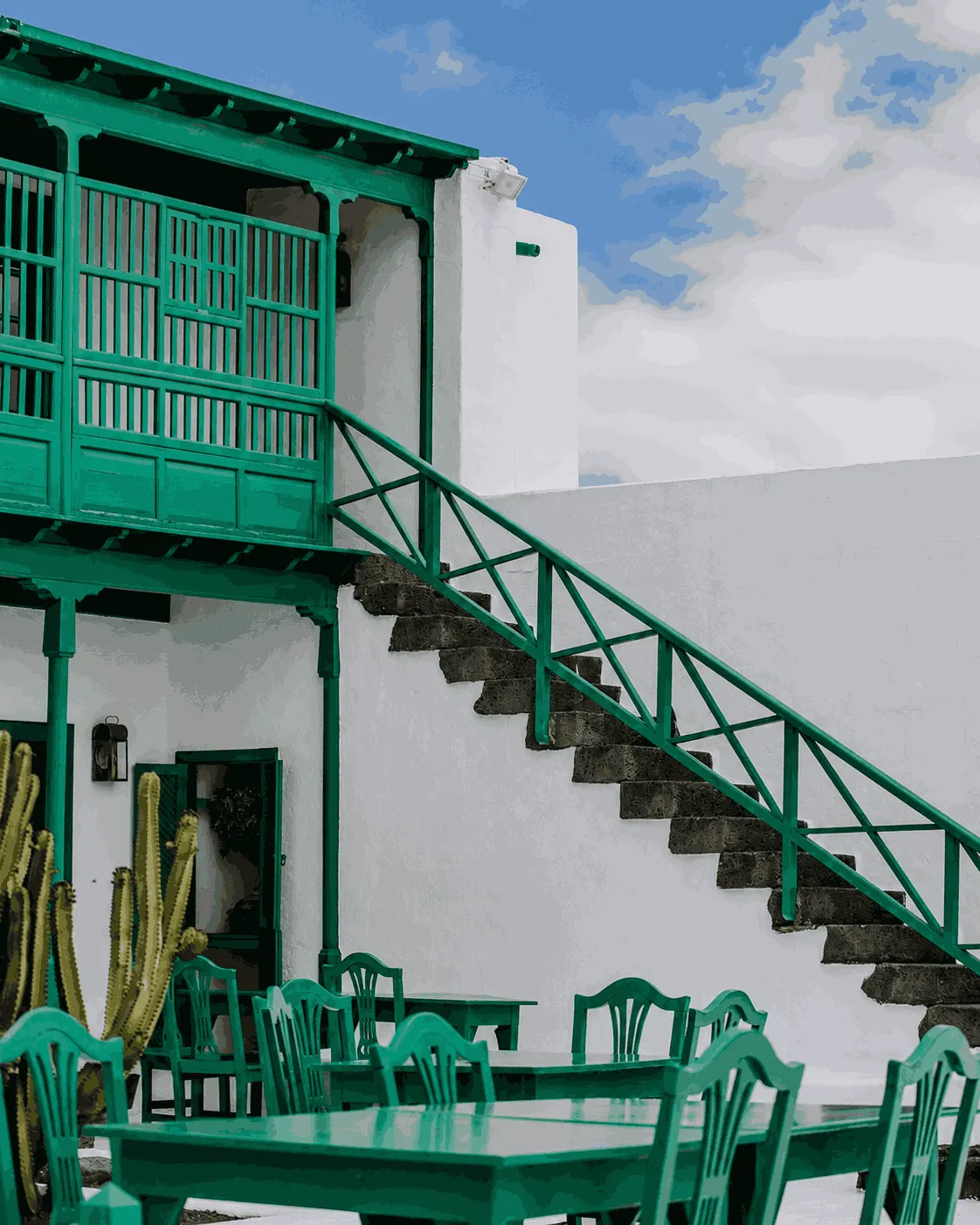
The Casa Museo del Campesino is part of a shared vision of Lanzarote, where art, nature and culture come together to tell a single story. Its architecture and many of its details are in dialogue with the other Centres of Art, Culture and Tourism, reflecting a common vision of the island’s landscape, identity and cultural heritage.
Beyond the square and the Monument, the Casa Museo del Campesino invites you to continue discovering how architecture, landscape, gastronomy and the smallest details form part of the same story. Explore its different spaces and notice how each one offers a new perspective on Lanzarote’s identity, creativity and traditions.
The tunnel
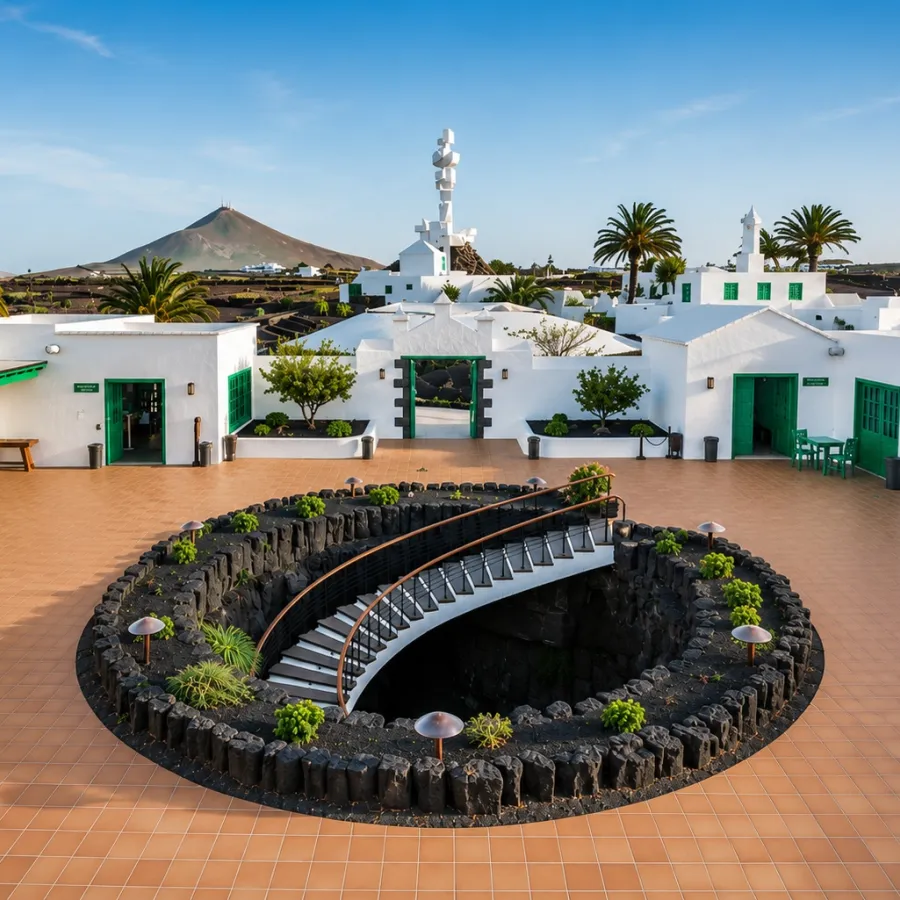
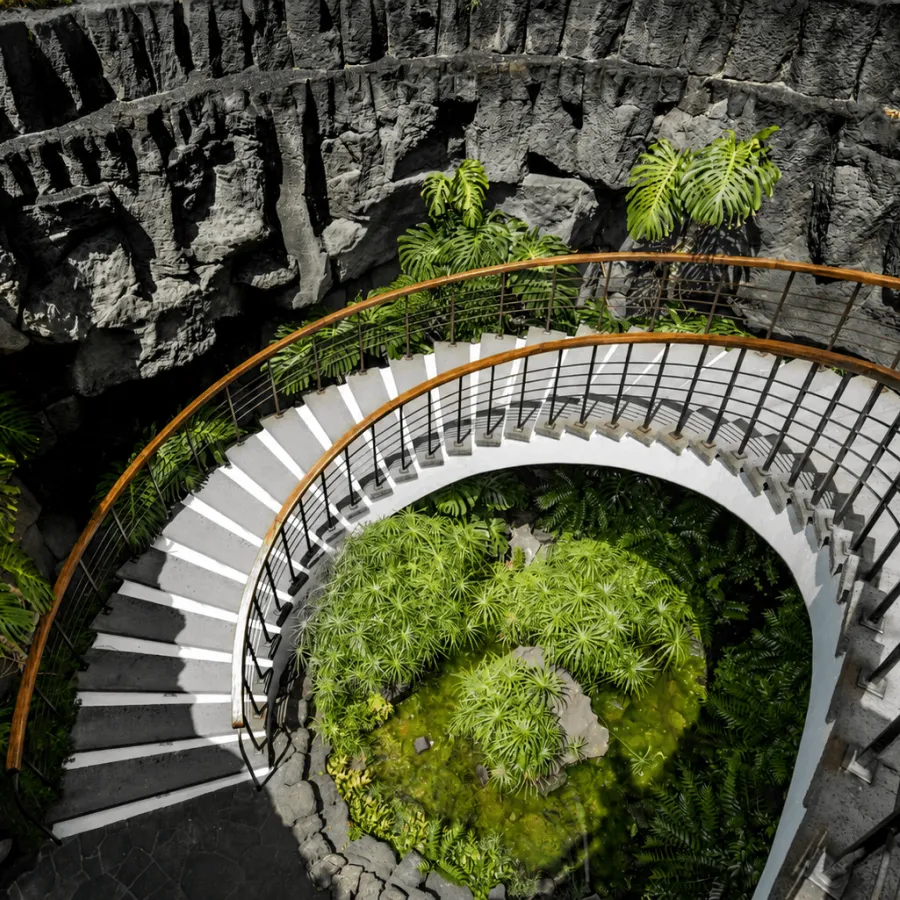
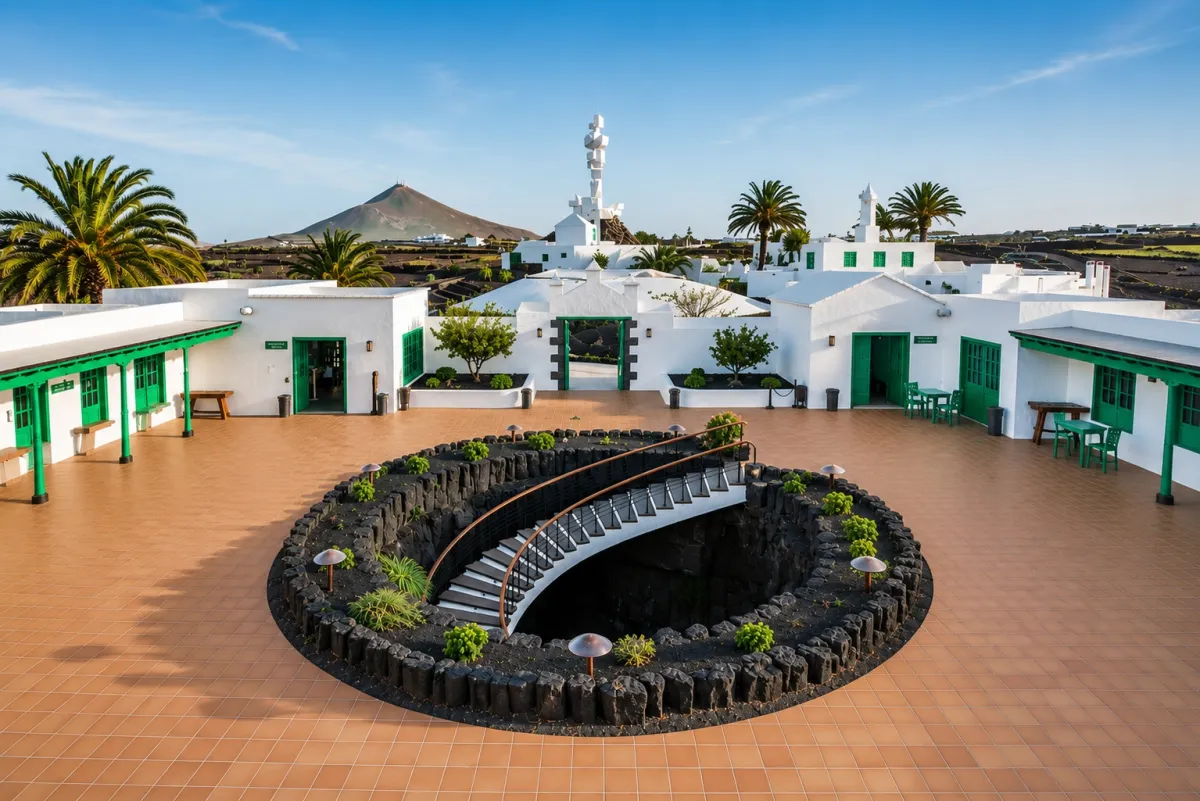
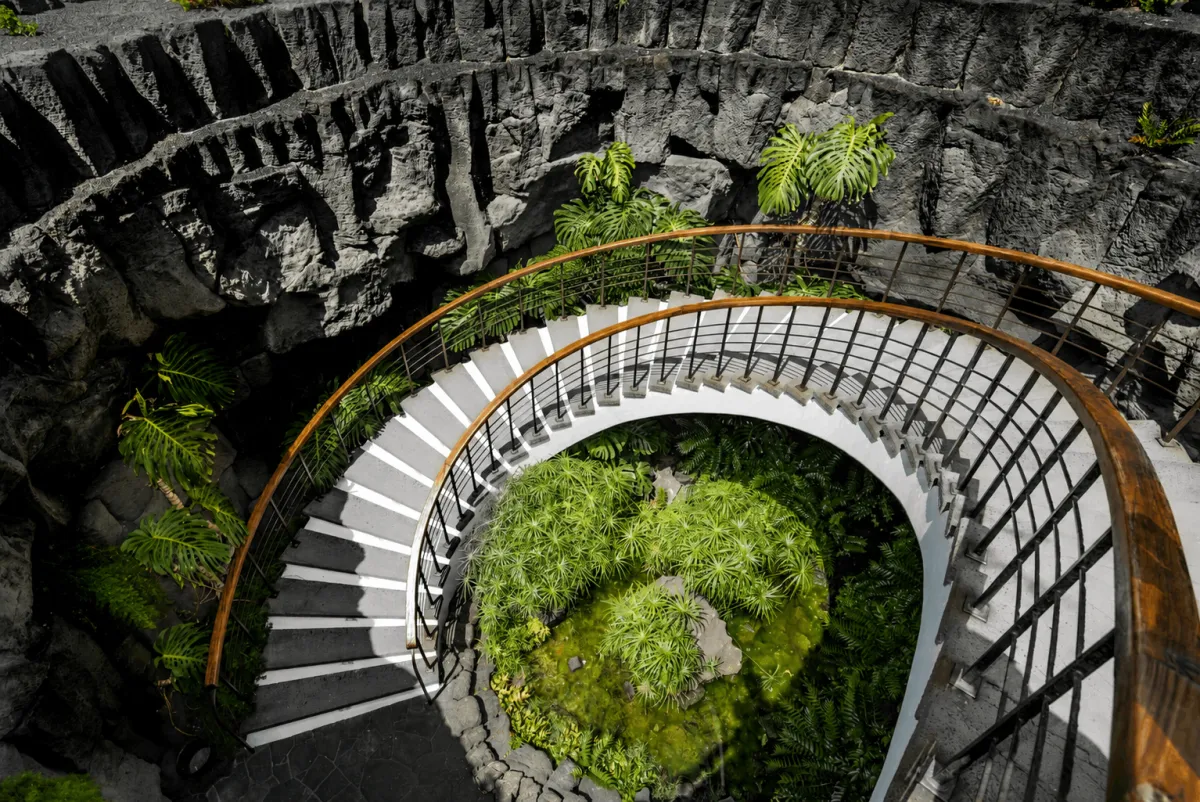
Descend the spiral staircase surrounded by ferns and maidenhair ferns, which will lead you to the tunnel connecting with the restaurant.
You are walking beneath a lava flow.
The ceiling above you is not a constructed vault. It is an original layer of basalt, approximately two metres thick, which was deposited here centuries ago. To create this passage, the earth trapped beneath it was removed and the volcanic rocks that form the walls were carefully positioned.
Look closely at the vertical openings along the sides. They are not decorative: they are windows into the subsoil. Through them, you can see the different geological layers that formed over time, each with its own colour and texture. A record of the island’s geological history, close enough to touch.
Along the tunnel, you will also find ornamental ceramic pieces incorporated into the volcanic rock. Walk slowly. It is worth taking your time.
The Function Hall
This auditorium is designed to host weddings, christenings and conferences. But if you look closely, you will notice details that connect this space with the other Centres.
Do you see the white triangular shapes in the circular ceiling? They recall those found in the Jameo Chico at Jameos del Agua. The ferns and skylights echo the architectural solutions of the Mirador del Río. And the skylight above the stage, with its recessed openings, is inspired by the silhouette of the sombrera de palmito, the traditional hat worn by Canarian women.
These recurring references are no coincidence. César Manrique and Jesús Soto designed each of the Centres as part of a shared architectural language, using recognisable materials and details that create connections from one place to another.
The tavern
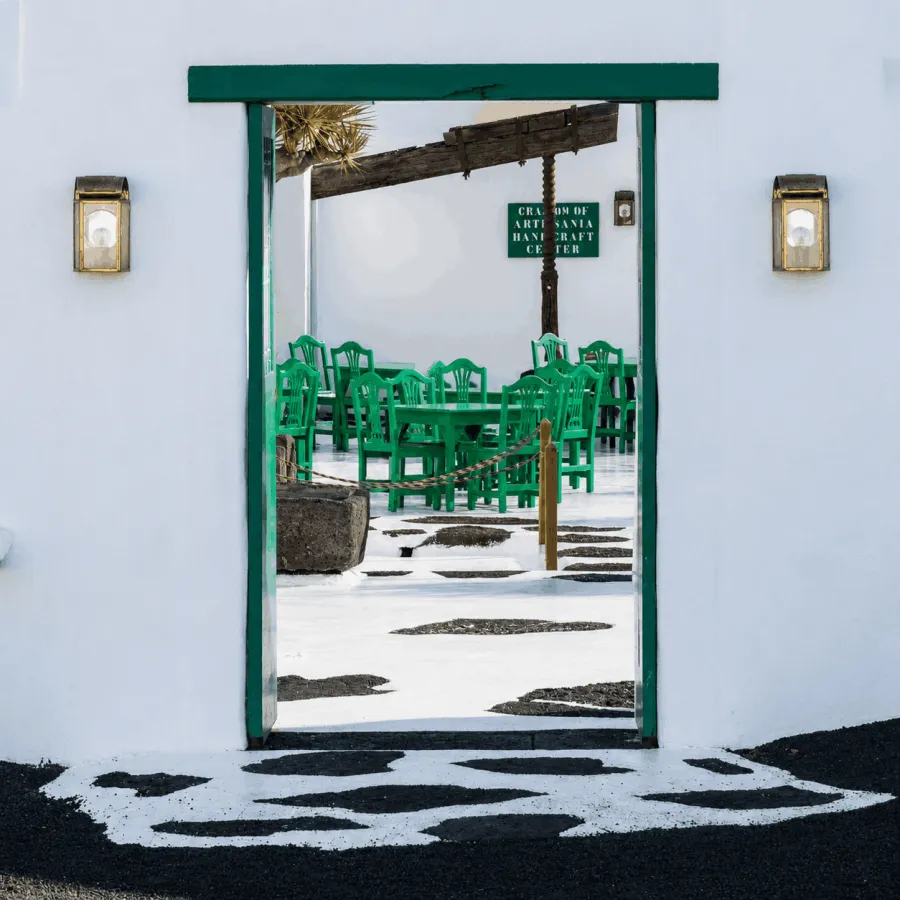
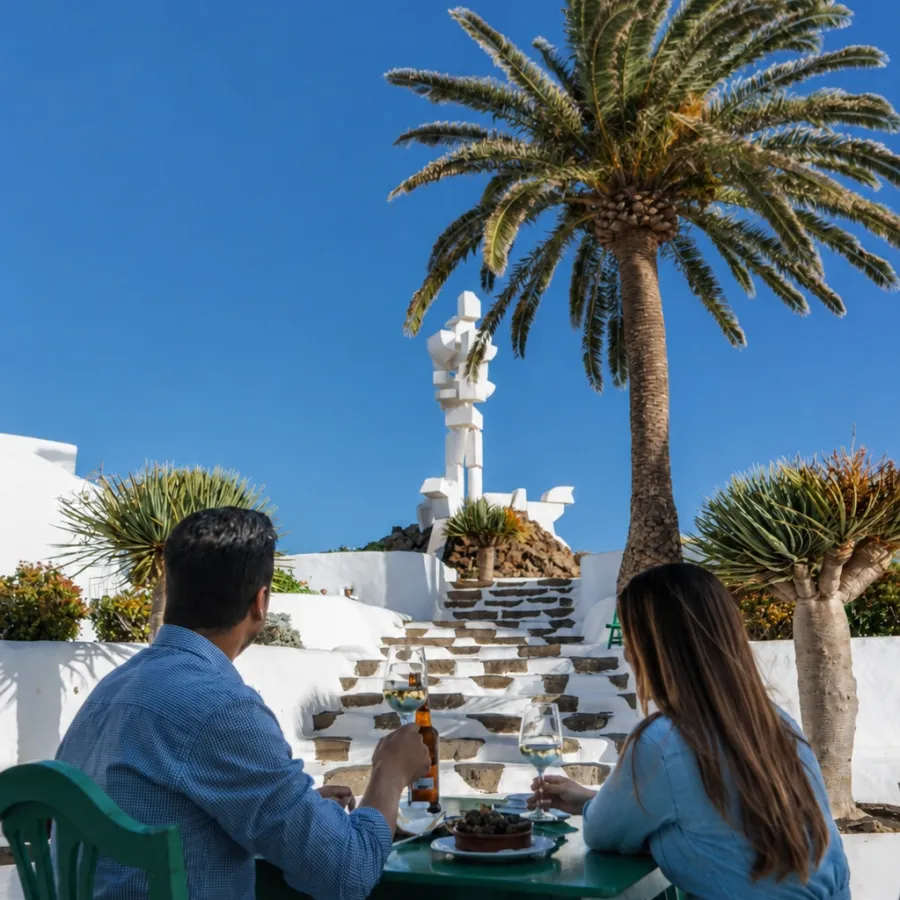
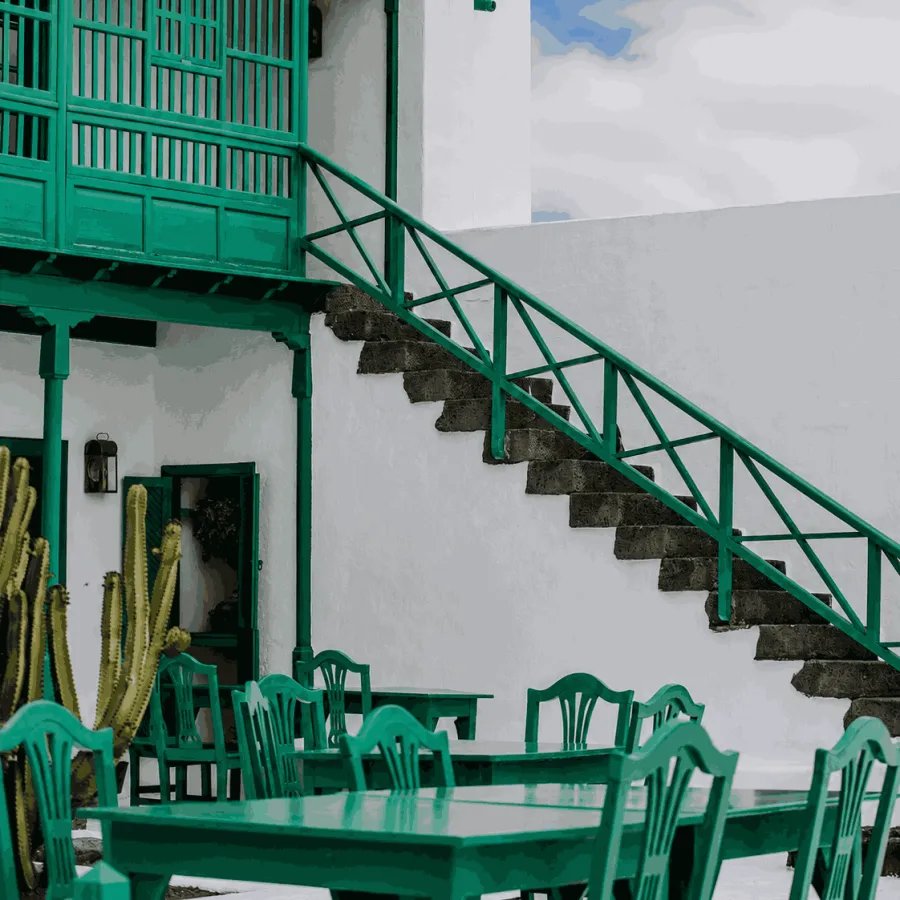
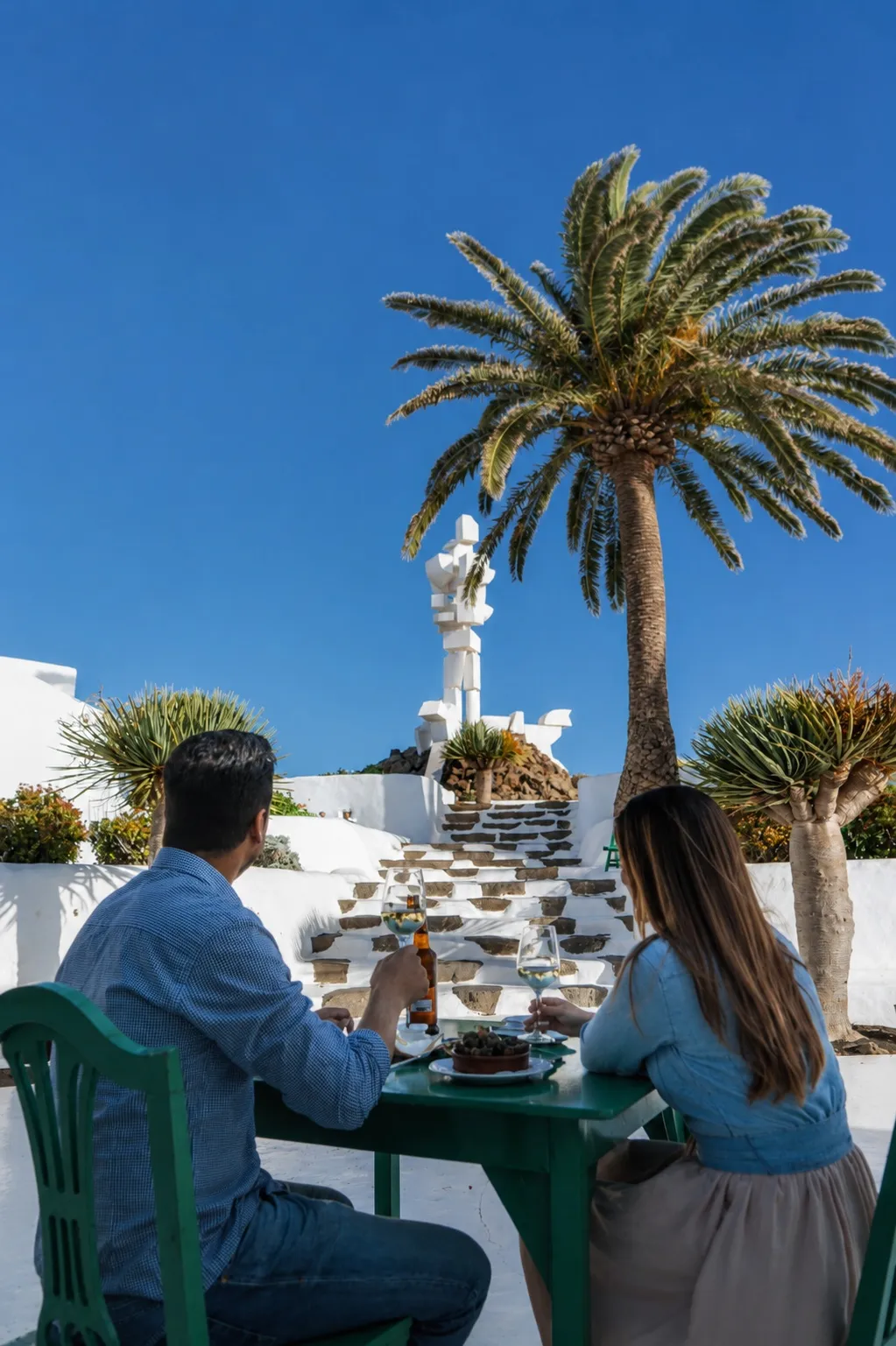
What is served at this table begins out in the landscape. The papas arrugadas are grown in volcanic soil. The mojo verde is made with coriander from local gardens, while the red version includes peppers and cumin introduced by early settlers. Sancocho—salted fish served with pella de gofio—speaks of the sea, fishing traditions and the toasted cereal flour that sustained the Canary Islands for centuries. The goat stew reflects the livestock that once grazed on the lava fields. And the cheeses are made from the same goat’s milk.
Before taking your seat, look at the small space by the entrance. There you can see the inside of the lagar, the traditional wooden wine press used to crush grapes. The basins and containers around it were used to collect the grape must.
Notice also the destiladera, a traditional water filtration system that can still be found in many Canarian courtyards. Drop by drop, water filtered through clay vessels, emerging fresh and clean.
Marking the entrance to the restrooms are two clay figures known as the Novios de El Mojón. Their story is told at the final stop of the tour.
Continue your visit at the table. Consult the restaurant menu.
The shop
Before you leave, one last story.
These clay figures are known as the Novios de El Mojón, and they come from a centuries-old tradition. El Mojón is a village in the municipality of Teguise, renowned for its pottery as well as its onion, potato and tomato crops.
The custom was simple:
When a man wished to propose marriage, he gave his beloved a clay figure with male attributes. If she accepted, she returned a figure with female attributes. In this way, their commitment was sealed.
The ceramic artist who kept this tradition alive for the longest time was Dorotea Armas (1899–1997). Today, her descendants continue the craft, introducing some variations while remaining faithful to Doña Dorotea’s original creations.
What may seem like a simple decorative object carries centuries of ritual, identity and memory. The same is true of the rest of the shop, where every handcrafted piece is more than a souvenir—it is part of Lanzarote’s history.
Thank you for your visit.