21 Feb 2016 · César Manrique
César Manrique, eternal legacy

César Manrique (1919-1992) was born in Arrecife, Lanzarote, an island where his artistic career has left indelible marks.
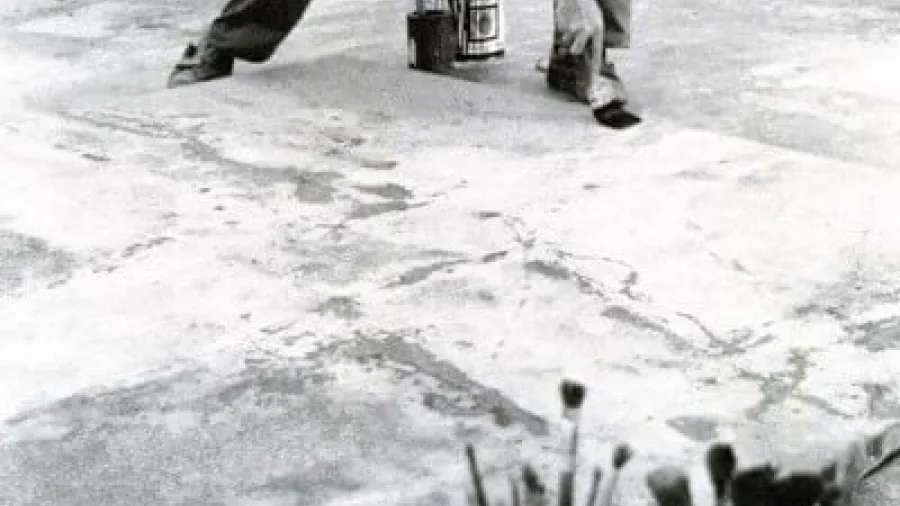
After finishing his studies at the Academy of Fine Arts of San Fernando in Madrid (where he lived between 1945 and 1964), he frequently exposed his paintings both in Spain and internationally. He participated in the XXVIII and XXX Venice Biennale (1955 and 1960) and in the III Hispano-American Biennial of Havana (1955). In the early fifties, he branched out into non-figurative art and researched the qualities of matter to make it the essential character of his compositions. It is thus well (like other Spanish painters such as Antoni Tàpies, Lucio Muñoz and Manuel Millares) to the informalist movement of those years.
He traveled all over the world and, in 1964, moved to New York. Direct knowledge of American abstract expressionism, pop art, new sculpture and kinetic art gave him a fundamental visual culture for his later creative career. In New York, he had three individual exhibits (in 1966, 1967 and 1969) in the Catherine Viviano gallery.
Return to Lanzarote
In 1966, he returned to Lanzarote for good. The island, which was then beginning to develop its tourist industry, promotes a model of intervention in the territory in key points of sustainability which sought to safeguard the island’s natural and cultural heritage; this model was instrumental in the declaration of Lanzarote as a Biosphere Reserve by UNESCO in 1993.
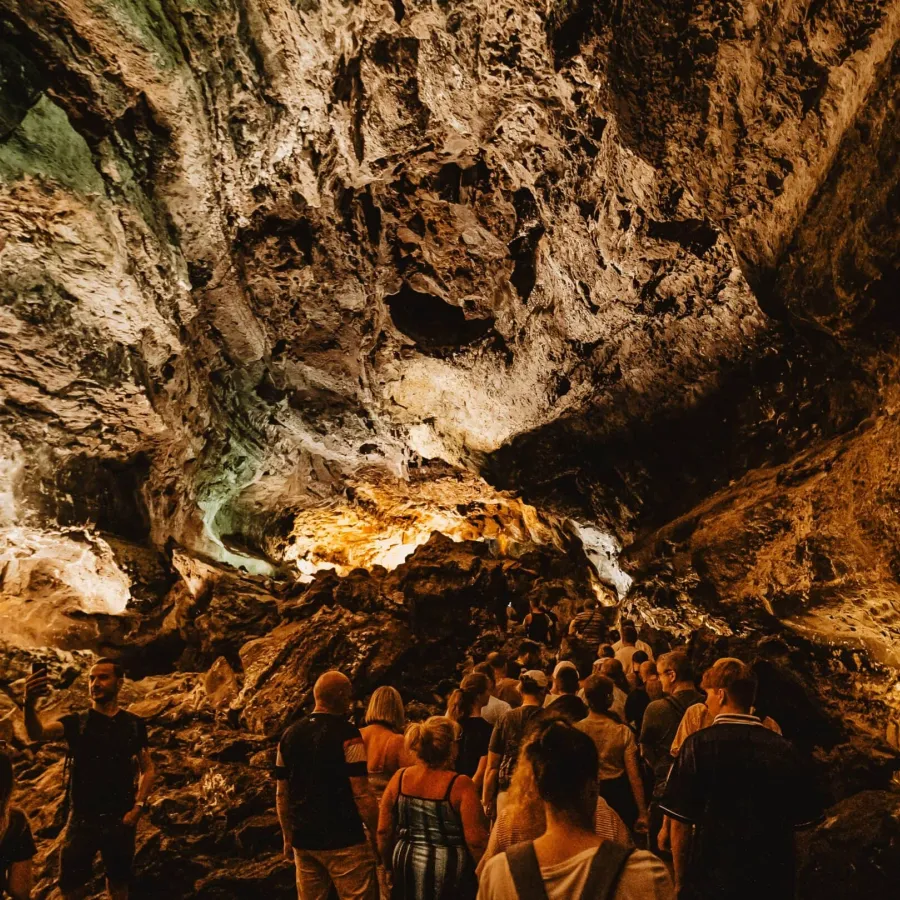
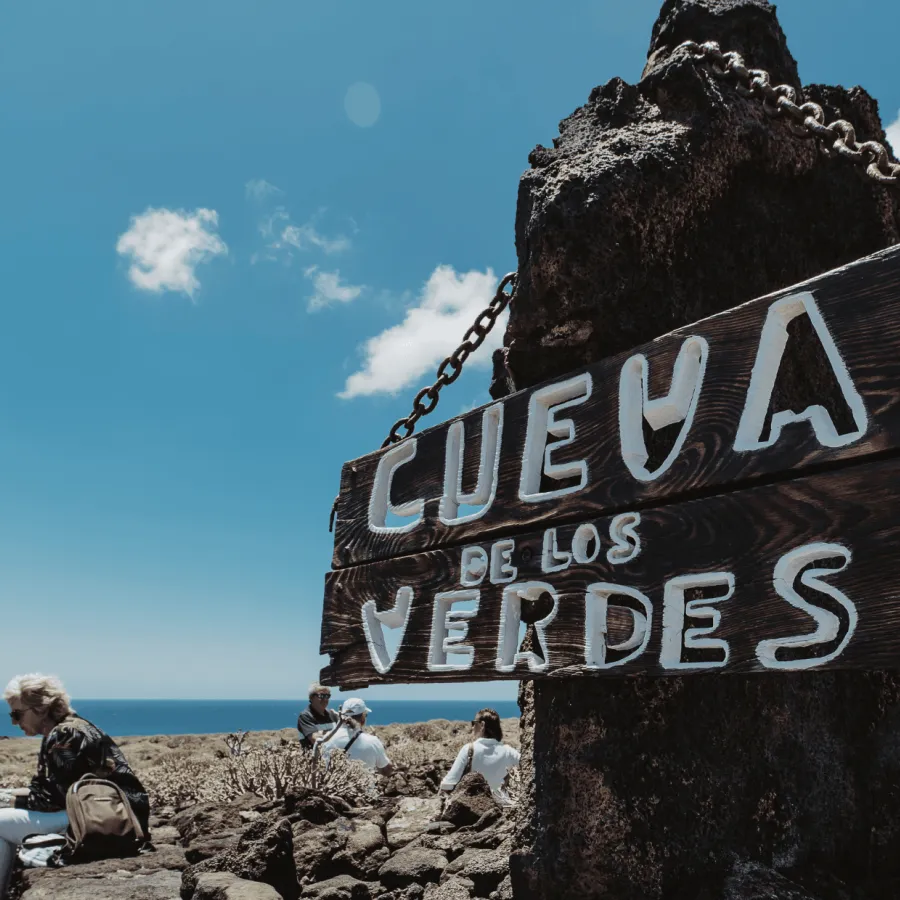
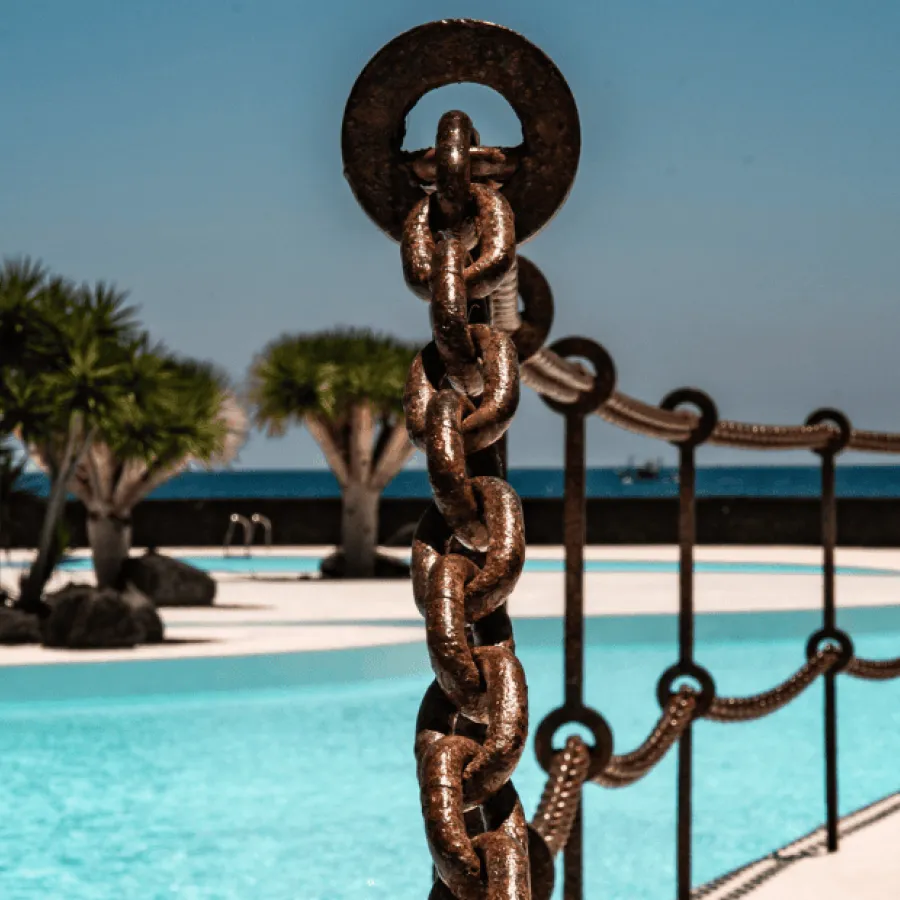
Parallel to the commitment to the island territory, Manrique opened his creative work to other art forms. So, he developed a new aesthetic ideology, which he called art-nature/nature-art, which may specify in its spatial interventions, a unique example of public art in Spain: Jameos del Agua, his home of Tahíche (now headquarters of the César Manrique Foundation), Mirador del Rio, Cactus Garden, etc.
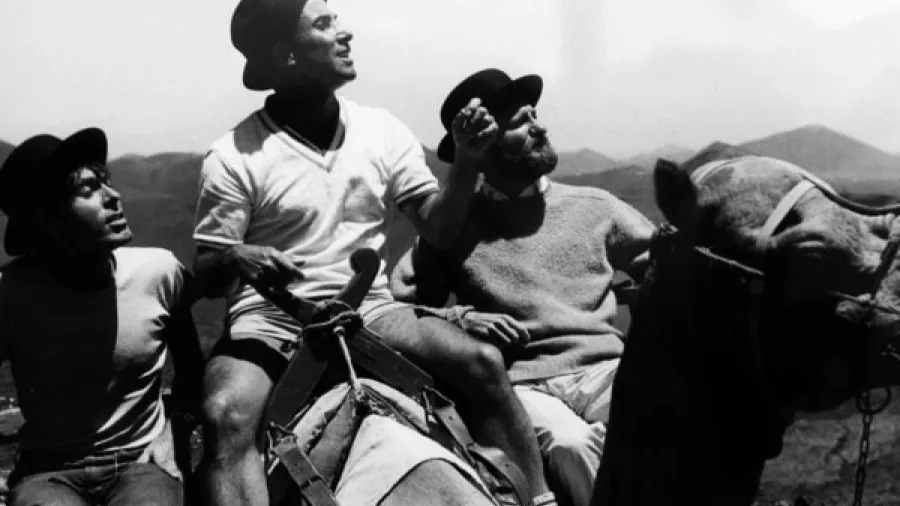
In addition to his interventions in Lanzarote, he devised various proposals on other islands -Costa Martiánez, Puerto de la Cruz, Tenerife; El Mirador de Palmarejo, La Gomera; Mirador de La Peña, El Hierro. Outside of the Canary Islands he worked in: Ceuta (Mediterranean Maritime Park), Madrid (Madrid-2 shopping center, La Vaguada), etc. They are interventions, mainly public works, (viewpoints, gardens, conditionings of degraded areas, coastal reforms, etc.) where respectful dialogue is maintained with the natural environment and positioned in relation to the architectural values of local tradition with modern conceptions.
Cultivator of different creative languages (painting, sculpture, urbanism, public art, etc.) underlying the whole of his artistic production is a clear desire to integrate with the natural environment. A syncretic and lifetime purpose (total art, in his words) that he made explicit in his designs of public spaces. A harmonisation effort, in short, that not only refers to his passion for beauty, but also for life.
More info http://www.fcmanrique.org/